


IEM Hosts "Personal Career Path Strategy" Masterclass from the Bank of Russia University
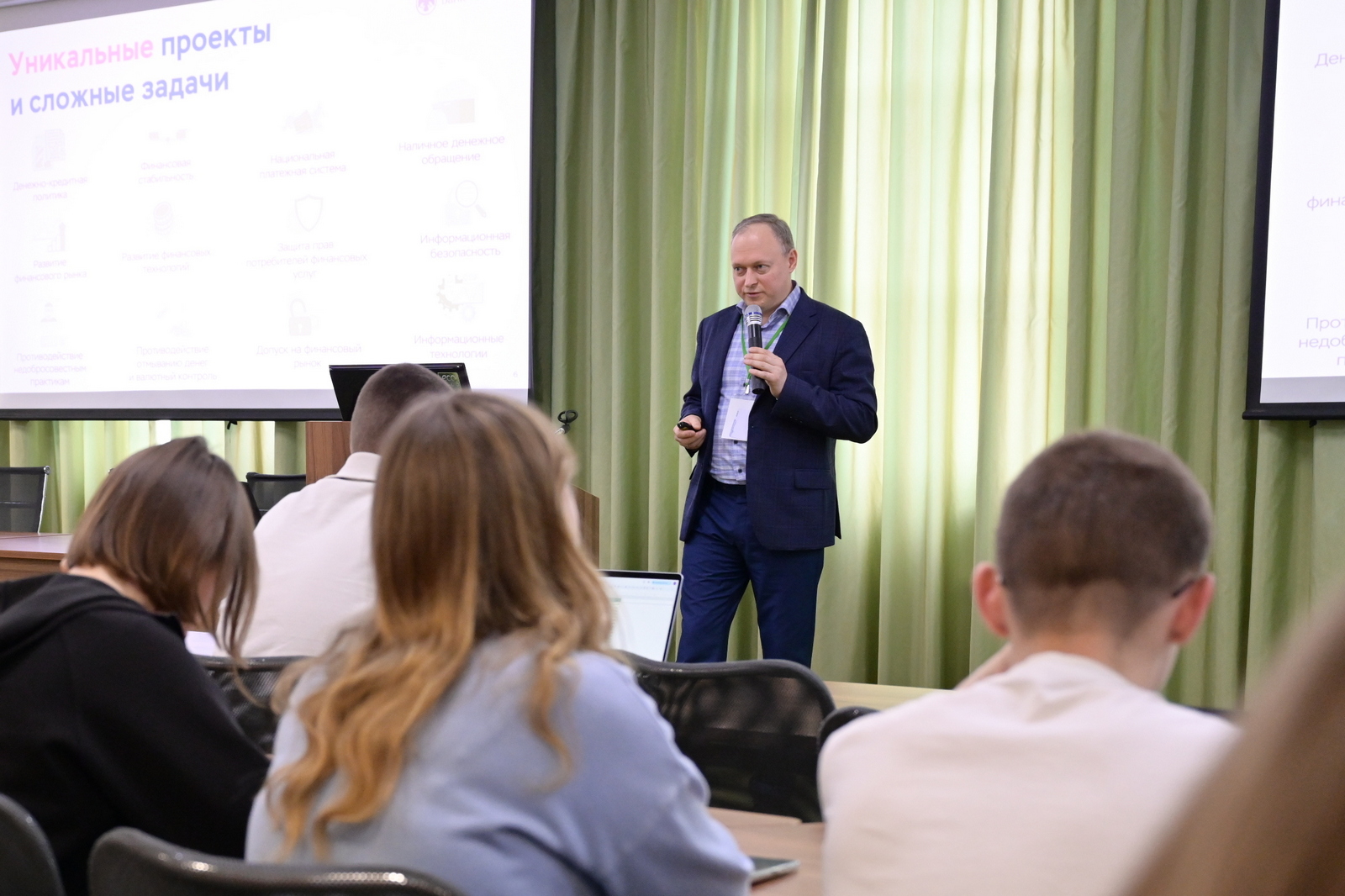
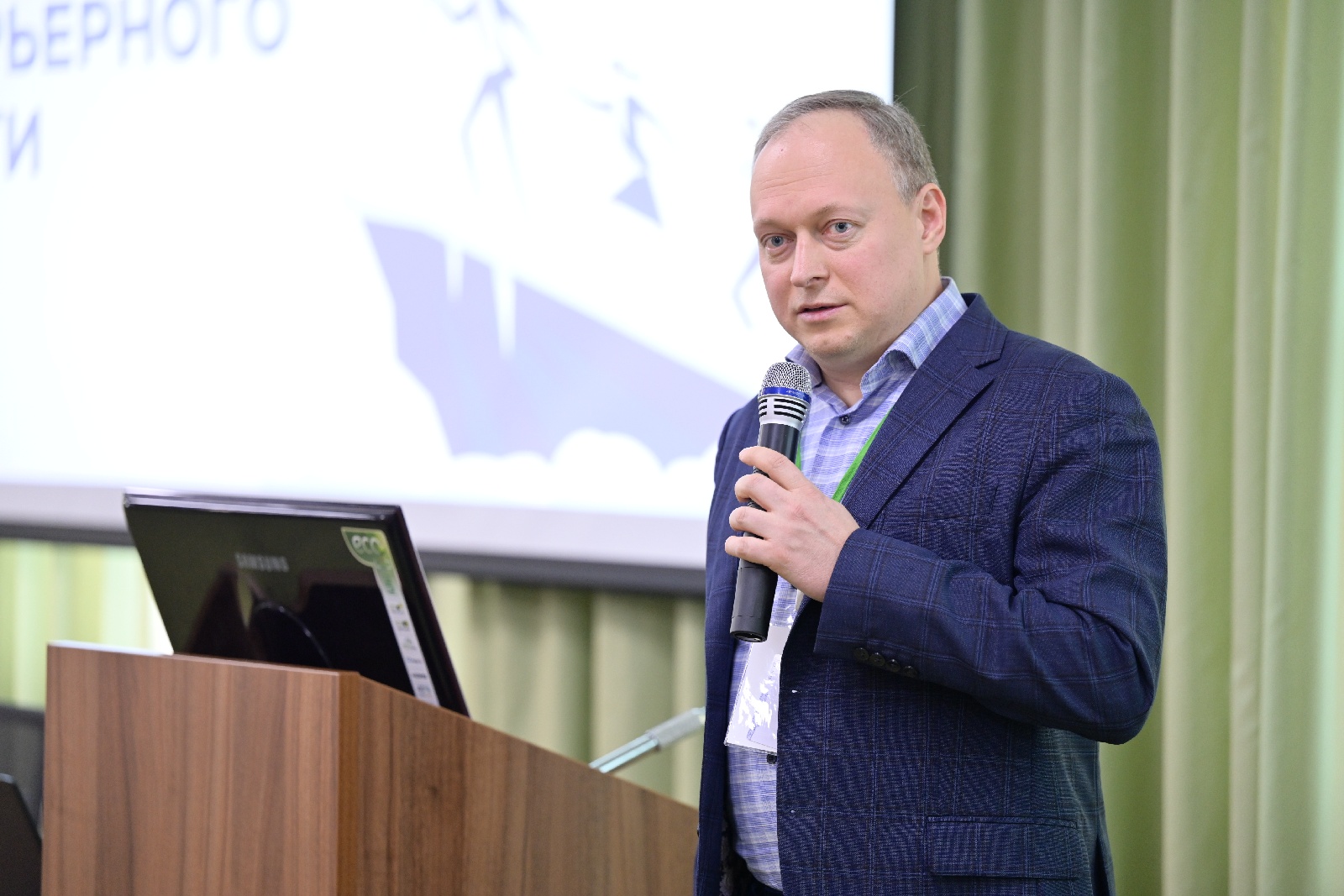
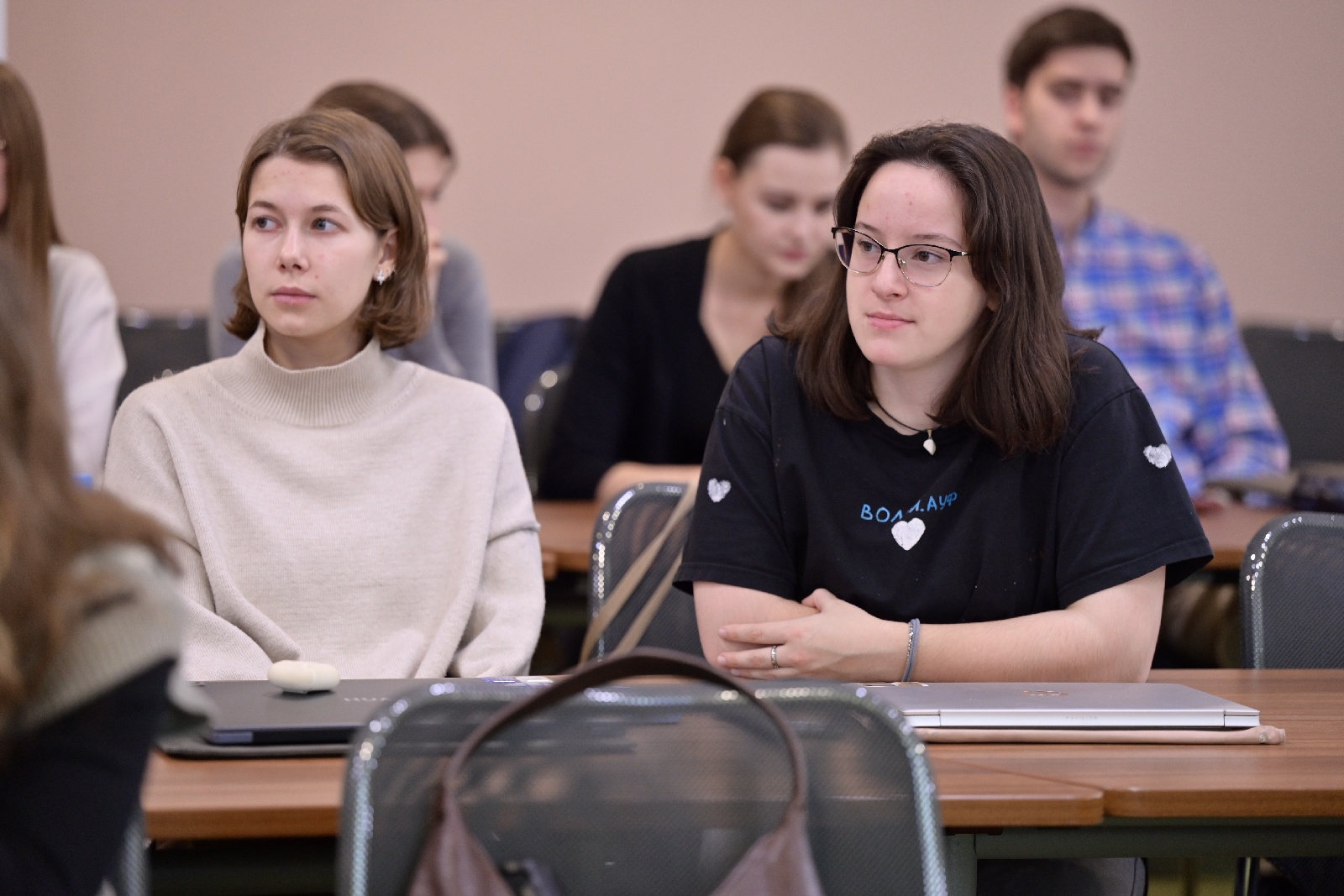
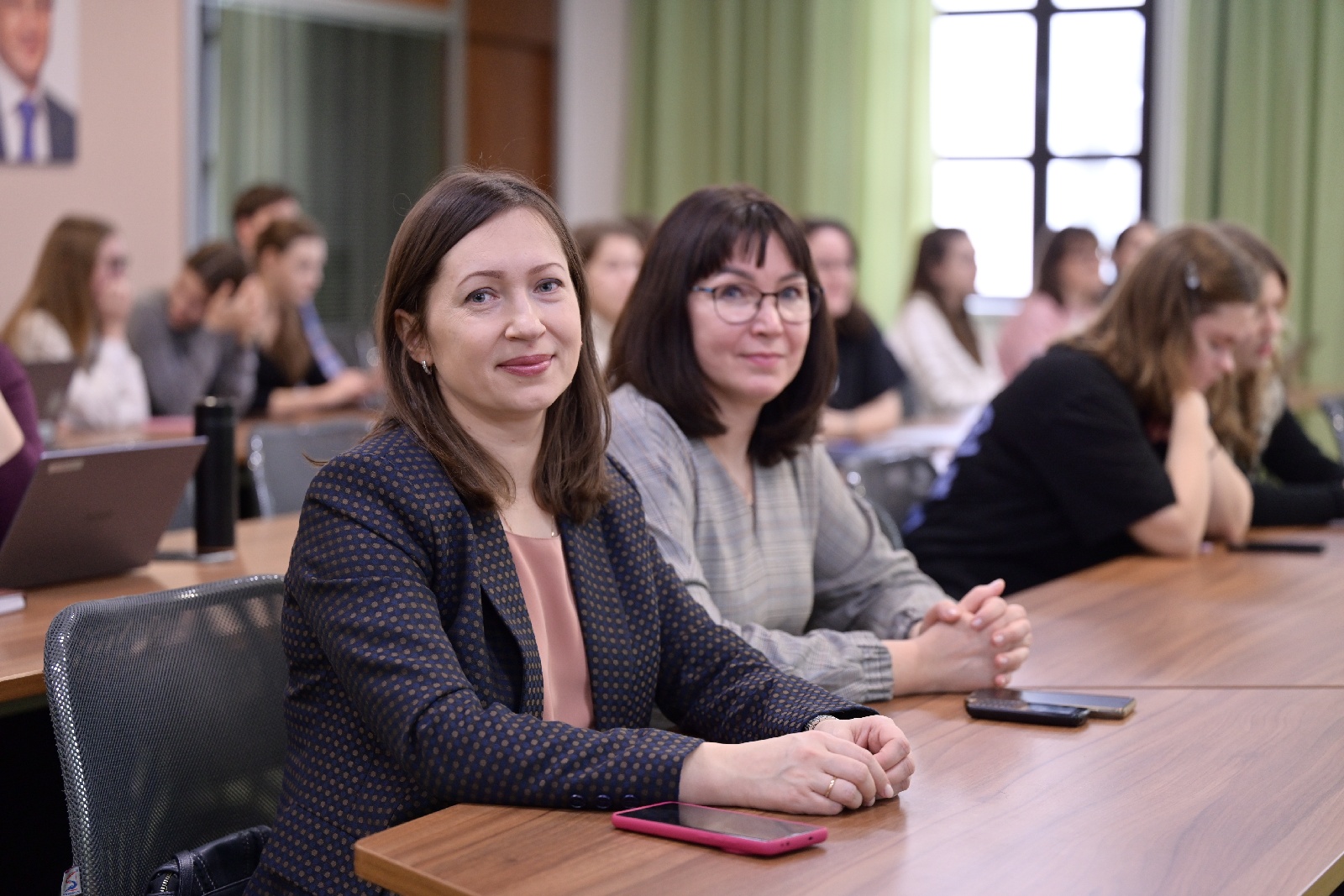
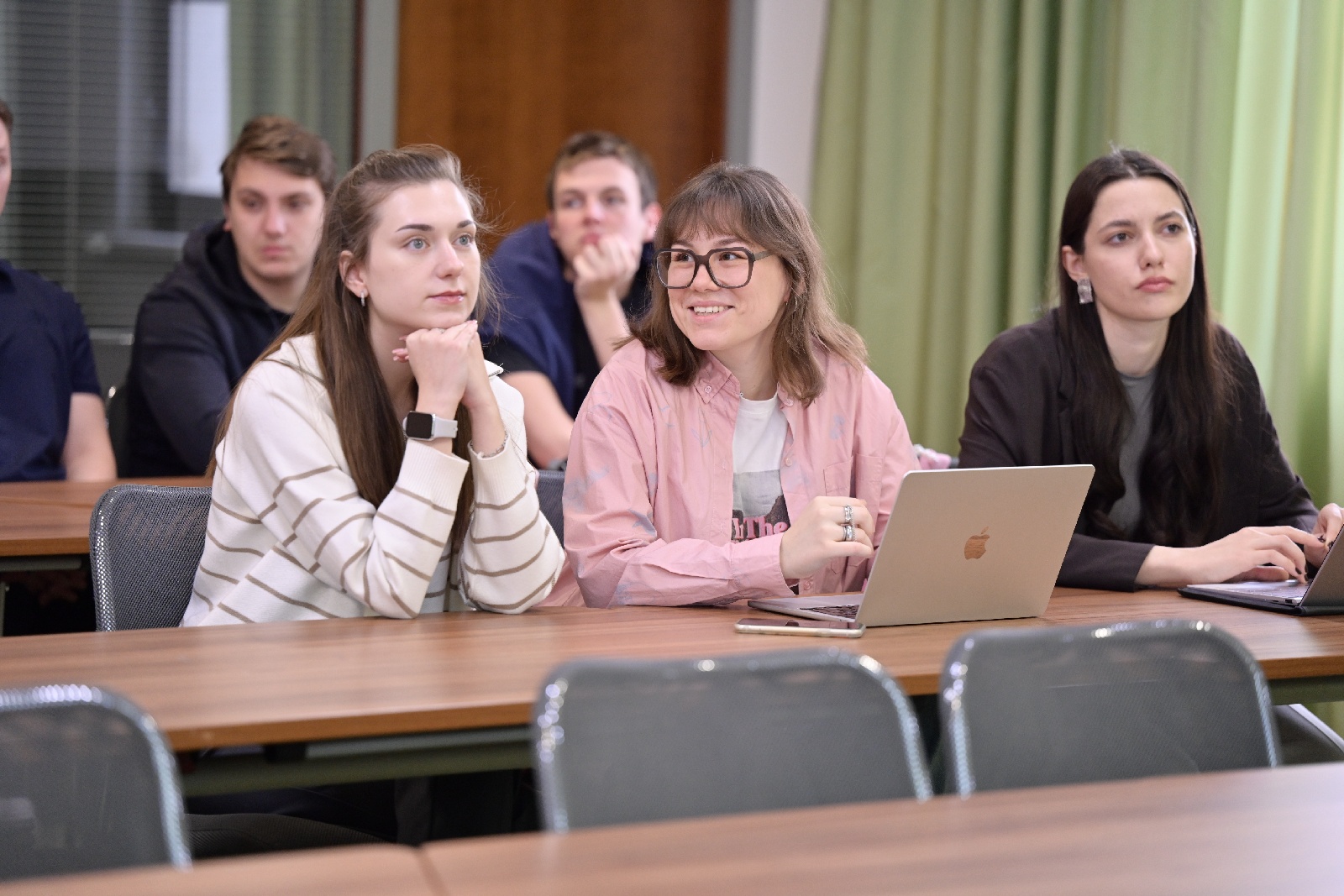
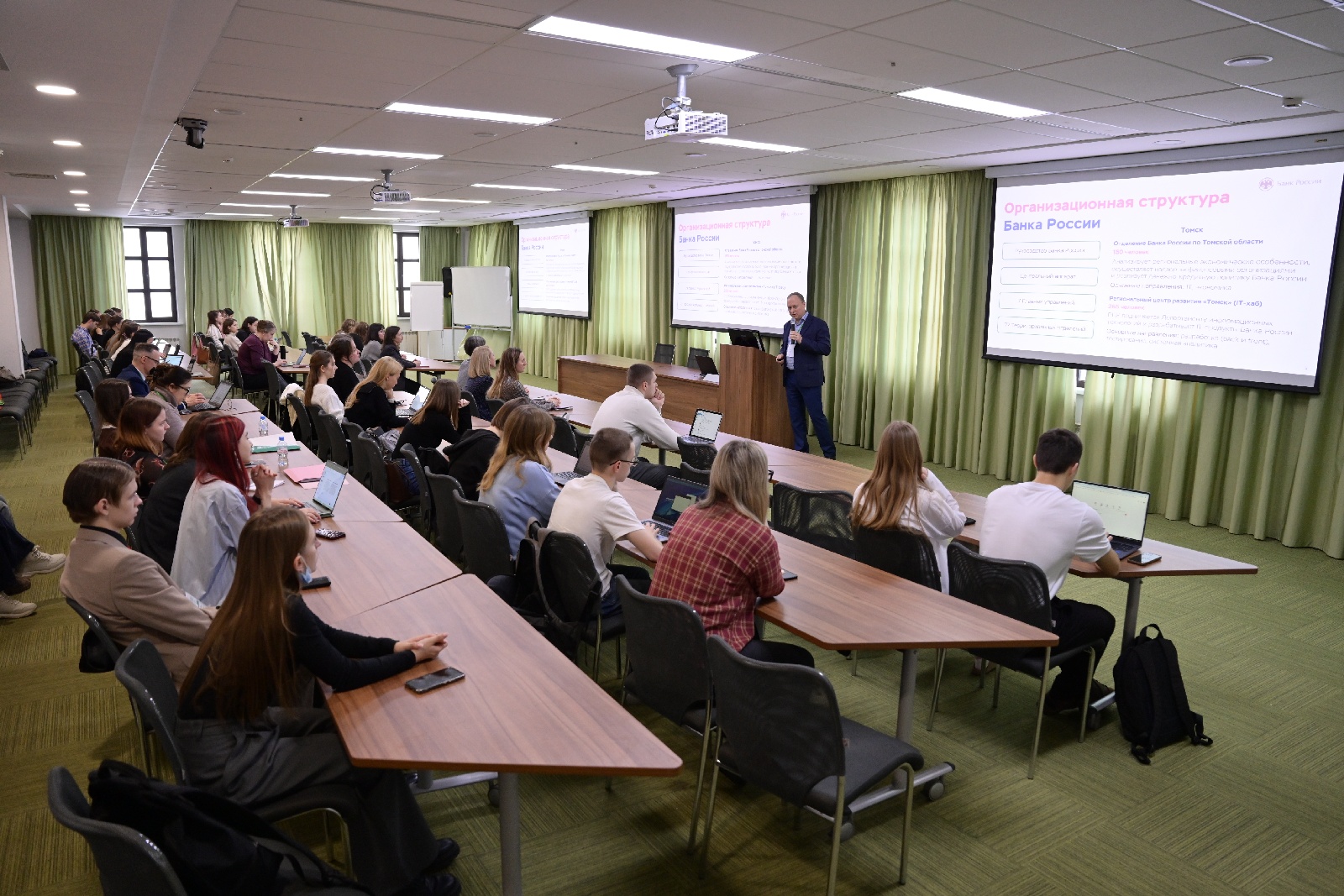
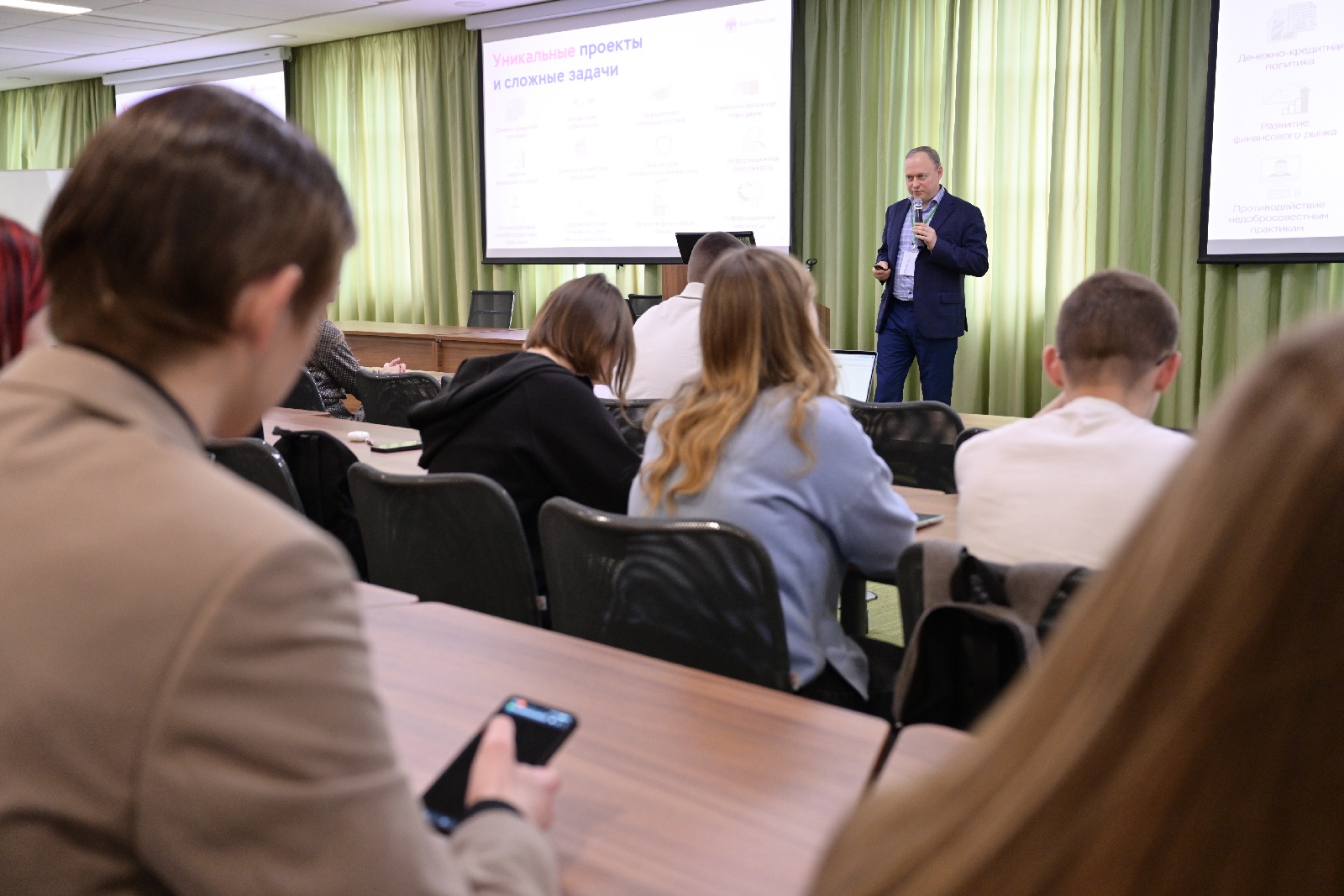
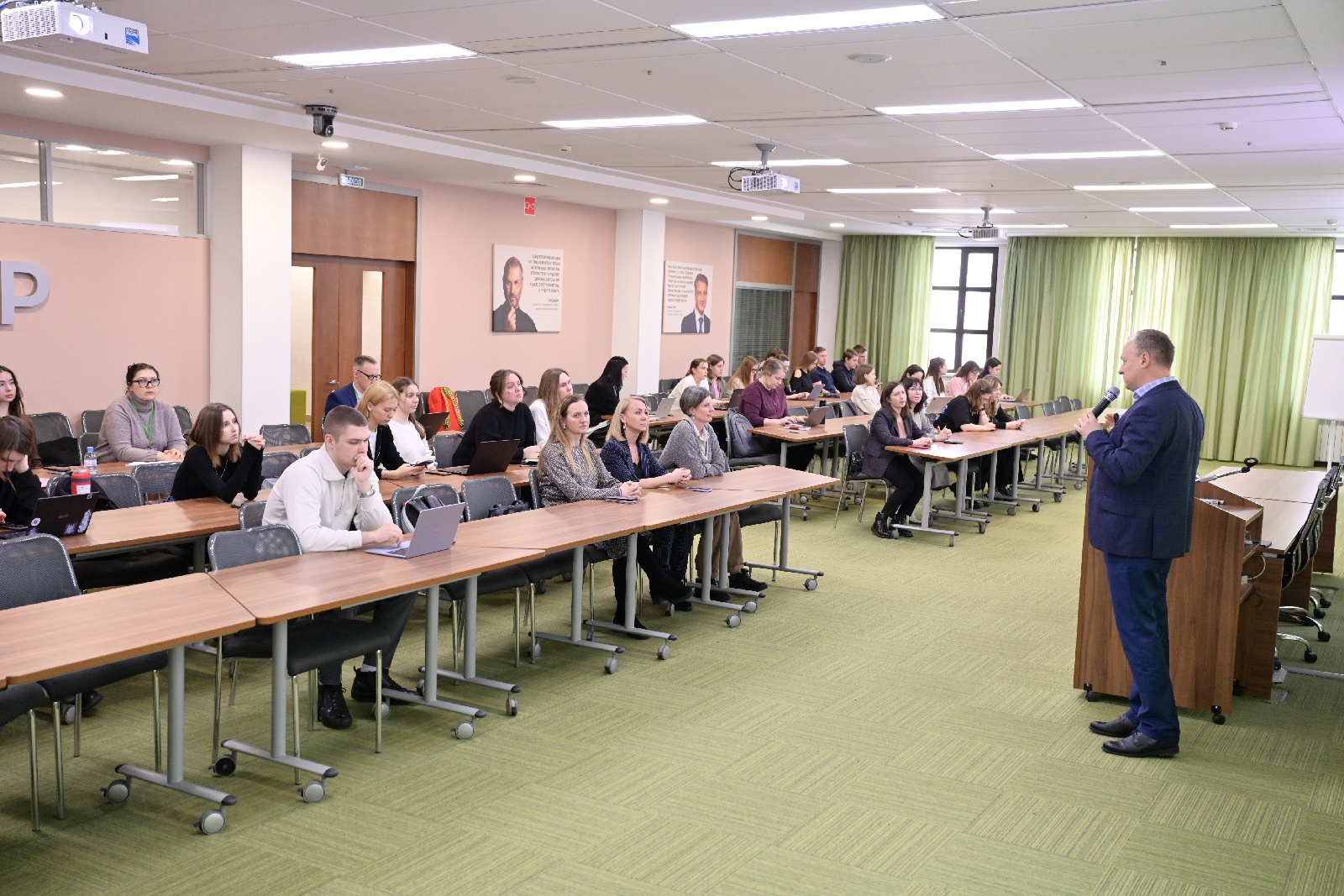
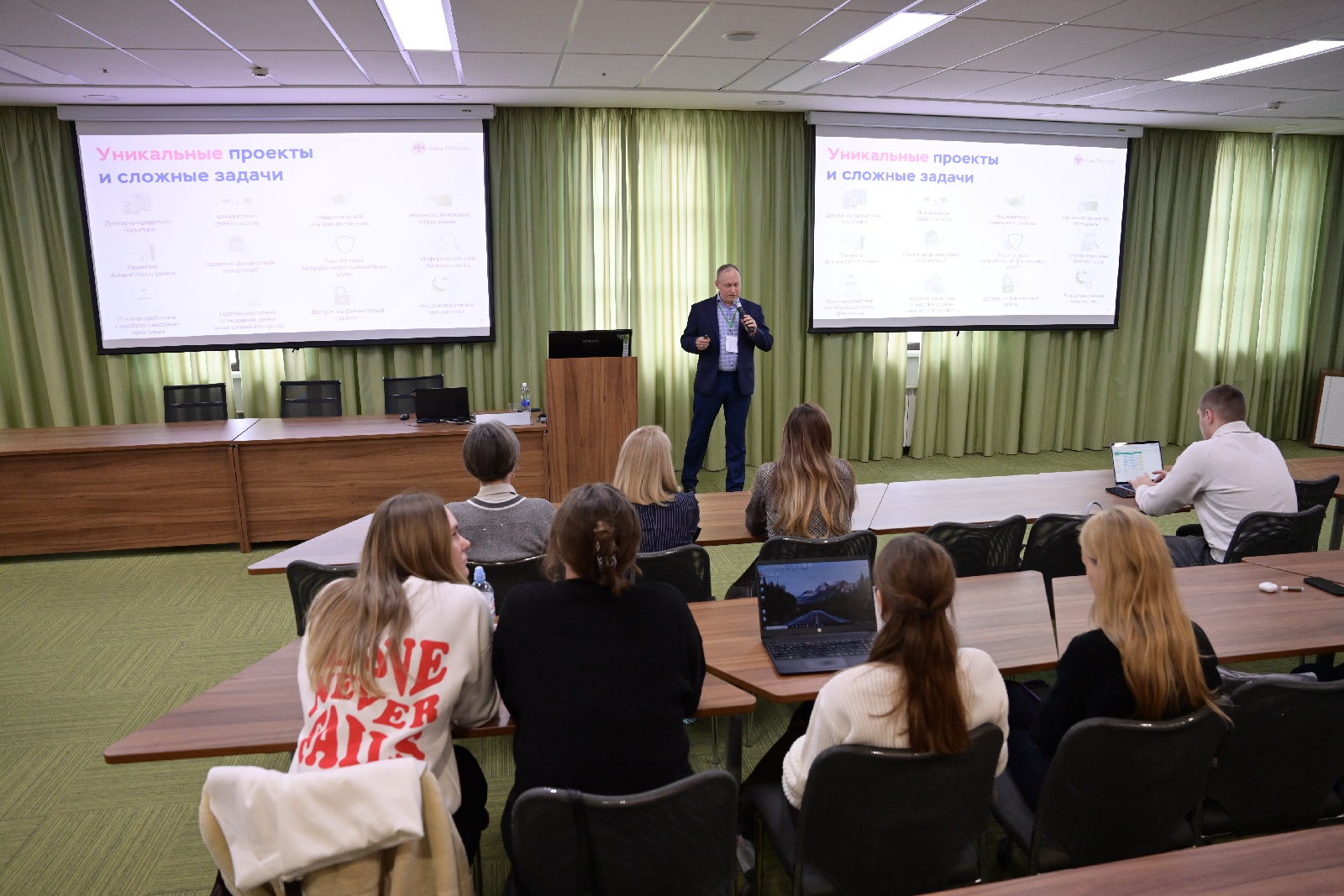
Andrey Afonin, Director of the Bank of Russia University, recently led a masterclass at the Institute of Economics and Management (IEM), Tomsk State University, guiding students on how to build a successful career in the financial sector. The expert shared his personal perspective on career and competition, as well as outlined the key opportunities the Bank of Russia offers to students planning a future in finance.
The session covered:
· Top skills for a successful career
· How to develop towards success
· Career and educational opportunities for students
· 5 steps for systematic development
When the speaker asked which skills and knowledge are crucial for career building, participants highlighted networking(a skill of finding and keeping contacts), psychological skills (self-regulation, stress resistance),flexibility, fast learning, teamwork, time management, and self-discipline. Afonin agreed with these points and supplemented them with a top-5 list of skills deemed essential for success in the coming years, as proposed by the World Economic Forum. This list includes analytical and creative thinking, ability to work with AI and big data, technological literacy, and cybersecurity.
"Our entire lives now happen within various gadgets, computers, and the Internet. If we fail to protect sensitive information, the consequences can be severe. Therefore, cybersecurity is paramount—for individuals, organizations, and the country. After 2022, the Bank of Russia withstands waves of various attacks every day; for us, it's a matter of security for not just the Central Bank, but the entire Russian economy," the speaker emphasized.
Andrey Afonin presented a classification of essential competencies for guaranteed success to students:
1. Digital Skills: AI, programming languages.
· Understanding how AI works, where it can and cannot be applied is crucial. He noted that AI already replaces programmers for basic tasks, making AI proficiency a "basic minimum" in many companies.
2. Soft Skills: Teamwork, time management, self-discipline, adaptability.
· These are universal human skills, not tied to a specific profession, but vital in any field.
3. Leadership Skills: The ability to inspire, set tasks, and motivate a team.
· These can be developed within a company. Many organizations, including the Bank of Russia, offer training for aspiring leaders, often using a "leaders teaching leaders" approach where senior management mentors subordinates.
4. Professional Skills (Hard Skills): Specific to a particular field (economics, IT, etc.).
· The set of in-demand professional skills is constantly evolving. To keep pace, major fintech companies and the Bank of Russia actively participate in updating educational programs and shaping new professional standards.
5. Cognitive Skills: Learning ability, creativity, systems thinking.
· These are especially important for effective interaction with AI, as artificial intelligence lacks creative problem-solving abilities. In a constantly changing industry and world, only a creative approach ensures the relevance of proposed solutions and potential technological leadership.
When asked how to develop these necessary skills, the Director of the Bank of Russia University stressed the importance of setting specific goals.
"Secondly, I would recommend participating in real projects. Learning by doing or project-based learning has a much greater impact than classroom learning or reading even the most useful book. Another key point—practice critical thinking, learn to look at tasks from non-standard angles. This is what allows you to interact more effectively with technology," Afonin advised.
Participants also learned about different career development paths at the Bank of Russia—horizontal, vertical, and project-based. In conclusion, the expert outlined opportunities for young people at the Central Bank, including expert meetings within the "Fintrek" project, seminars on economic research, an ESG school, the "Key Rate" game, the "Finnopolis" fintech forum, and youth tracks at forums on cybersecurity, macroeconomics, etc. Special attention was given to the annual internship program.
To qualify for an internship, applicants must be 2nd-4th year full-time bachelor's or specialist students, or master's students. The selection process includes an online application, testing (verbal/numerical skills), a video interview, and a final interview.
"Many departments at the Bank of Russia have very high requirements for interns.Nevertheless, a significant percentage get hired—about 40% of those who complete internships end up working at the Central Bank. There are many good, successful examples," noted Andrey Afonin.
5 Steps for Systematic Career Development from Andrey Afonin, Director of the Bank of Russia University:
1. Set a Goal: Goals should be SMART (Specific, Measurable, Achievable, Relevant, Time-bound) to track progress effectively.
2. Map Strengths and Weaknesses: Identify your "development areas"—decide whether to improve weaknesses or further strengthen your advantages.
3. Analyze Risks and Obstacles: Assess potential barriers (physical, financial, etc.) on your path to the goal.
4. Prioritize: Choose 2-3 most critical areas for development, as it's impossible to improve everything at once.
5. Take Action: This is the most crucial step. Making a decision and starting to act are two different things.